
Tiptoe Through the Tulips
Posted: December 14, 2012 Filed under: Uncategorized | Tags: applications, fiscal cliff, investments, laziness, monetization, over-optimism, shortcuts, speculation, technology, wall street Leave a commentPeople generally have a love of shiny things (see Kardashian, Kim). This is particularly true of the Dutch. If you’ve ever been to Amsterdam, you know that while it’s often grey, or perhaps precisely because it’s grey, the people there are abundantly colorful and take particular pleasure in the shinier things in life.
While this can make for a fabulous visit you’ll never forget (except for the parts you want to or can’t remember), it also can cause problems. In the seventeenth century the Dutch went mad for tulips. Blinded by beauty, lust and a love of shortcuts not unique to them, their infatuations nearly brought about their ruin.
I think there’s a lot to be learned here.
Coming from the East, tulips were exotically beautiful. As demand exceeded supply, they became the ‘it’ thing for the Dutch across the socio-economic spectrum. At the high point, bulbs were going for more than the average annual income of the working Dutchman. Their bulbs were as sought after as diamonds.
While certain laws fail to apply in Amsterdam, the laws of supply and demand have always existed. People went all-in on tulip speculation, banking that demand would always outstrip supply and these fragile bulbs were a sound and sturdy investment.
Then one day, as quickly as the craze came, it went. In the same way that the Dutch were swept up in a tulip frenzy seemingly overnight, they seemed to equally sober up in unison. Tulip traders were greeted by nothing more than the sounds of crickets when only the day prior they were in the eye of a buying hurricane.
Kaput.

geraldscarfe.com
What happened? On the Buy side of the equation, sometimes our heart and loins trump our heads, and rational thought gets drowned out (see Petraeus, David). As Woody Allen famously said in response to the question of how he could marry a much, much younger woman who also happened to be his common-law daughter, “The heart wants what it wants.” While we can debate the legitimacy of the “passion” defense in terms of flowers or frauleins, what we cannot deny is the fact that blind lust in all its forms is as old as dirt.
We also have to recognize that while The Tulip Tumult pre-dates baseball by centuries, this was definitely a swing for the fences. Buying tulips for a few guilders and selling them for hundreds or even thousands sounded a whole hell of a lot better than farming, tending to sheep, banging nails or dealing with rude and unreasonable customers as a merchant. It was hard not to think of bedazzled clogs and cruising down the canals in a sweet new pimped-out boat. No doubt they knew that there was risk but suspended disbelief as their heart whispered for them to do.
Hmm. I feel as though I’ve heard about this recently in the financial pages.
Now on the Demand side, I think two things probably conspired to bring a frost to the tulips. First, eventually someone came to their senses and recognized that their behavior had been unwise if not downright wrong. They told someone and it spread quickly. You see, people deep down knew they were being foolish, knew their speculation was based on their hearts and not their heads. They just needed a bit of a slap, not an anvil intervention. Then they were driven to make amends with incredible speed. Think of Ferris Bueller tearing up the stairs to jump in bed before his parents discover he was ever gone.
Second, THE Plague was in their midst. When people start dropping all around you in hideous and grotesque ways and you don’t know why, things get serious pretty quickly. You put aside foolish things.
I said you put aside foolish things.
Like tulips. And other things that glitter but aren’t gold.
Do we need a financial plague or a political one for us to turn away from gimmicks and shortcuts and go back to what made us great– daring vision, practical skills and an incredible commitment to doing things the hard way?
I hope not.
So smell the tulips, but just smell them. Bring some home after a hard day’s work and you’ll enjoy them even more.
Whose Brain is This, Igor?
Posted: November 29, 2012 Filed under: digital media, radio | Tags: frankenstein, innovation, internet royalties fairness act, josephy murray, media, mobile, Music, pandora, progress, radio, royalties, shelly, Streaming, transplants Leave a commentDr. Joseph E. Murray died this week at the ripe old age of 93. Even in monster years, that’s a pretty good run. The good doctor found fame for having the audacity to believe that he could save lives by transplanting human organs from one person to another. As it’s been successfully done 28,535 times this year alone, I think the jury’s in. He was right. And oh so wrong to so many.
In his day, he was compared unfavorably to the first Doctor who “thought he was God.” In an NPR interview Murray recalled, “Well, they (were) saying that God didn’t want this to happen. It’s unnatural. The doctors are on an ego trip. Dr. Frankenstein stuff.”
If Murray thought he had a rough go of it, he should have had a Starbucks with Shelley. In her day she was crucified for being a discredit to her profession and her gender.
“The writer of it is, we understand, a female; this is an aggravation of that which is the prevailing fault of the novel; but if our authoress can forget the gentleness of her sex, it is no reason why we should; and we shall therefore dismiss the novel without further comment.”
-The British Critic (April 1818)
Cut to today where there’s actual debate about ‘shadow siblings’, where parents are essentially growing genetic clones of their children in case the first-borns ever need a lung or liver should theirs fail. The dilemma or strategy, depending on one’s point of view, is beautifully dramatized in the novel My Sister’s Keeper.
If there is such a thing as a line, this scenario seems to approach it to me. But, that’s the point. To me. Things I do or believe make no sense whatsoever to many– starting with my parents.
Transplants, like any major advance in technology, medicine, the arts, or any other facet of life, are not for everyone. That’s why they make chocolate and vanilla. Choice. Some would gladly take a kidney from a donor or bake themselves in chemotherapy and radiation treatment to wring even a few more grains out of the hourglass. Others, when confronted with their mortality, pour themselves a stiff drink and sit stone-faced waiting for their grim guest’s arrival. It’s a choice. Who are we to say?
Unlike the innovator’s dilemma, I think of this as the ‘Complacency Conundrum’. To keep calm and carry on versus trying something, anything quite literally, to change a fate which you don’t buy into. It’s not inherited or ordained. It’s authored to those who kick in the stall.
My father went apoplectic when I suggested Baseball was foolish not to utilize instant replay in limited cases. Cases like, I don’t know, when someone legitimately became the twenty-fourth human in history to throw a perfect game only to be denied by an umpire’s inexplicable mistake. We all make mistakes. Fix them when you can, I reasoned. “Mistakes are a part of baseball!” he stammered.
Fine. Baseball’s audience is what it is and is on the trajectory it is. Football, which has heavily leaned both into technology and culture in a way Baseball never would, is on a very different path. Watch whatever you want.
It applies to media in the same way. Accept a fate that’s clear or do something radical to alter it with assurance you’ll be killed for that as well– and not softly. Technology has provided us choice. In the case of Radio it allows us to listen to virtually anything we want whenever we want wherever we are. That’s pretty good, right?
Not to certain Traditional Radio stations. Their formula is DJ chatter, commercials (except NPR), and content– almost in equal measure. Pandora comes along armed with Stanford guys who say, “our data shows the only thing people hate more than idol chatter is farging commercials, so we’re eliminating chatter and shrinking the advertising elephant in the room to the size of a mouse.”
Heretics! Burn them at the stake! That’s crazy talk.
These are the kinder commentary.
I say let them compete. But let them compete on an even playing field. This week, in fact, the Internet Radio Fairness Act was brought before Congress. The old guard, super-heavy-users of leaches and hot toddies, will tell you this is an attempt by Pandora to seek relief from a reasonable burden of “taxation”, sorry, “royalties” they’re currently paying to rights holders. “Why can’t they just run a proper business model like we do?” they’ll ask incredulously, knowing full well they pay no royalties at all.
The real issue, in fact, is not whether online royalties should be lowered but whether over-the-air terrestrial royalties should be instituted.
It’s time.
A transplant is now possible. You don’t have to get one, but it’s not for us to prevent others from getting one. If people want to listen to terrestrial music, they should obviously be allowed to and encouraged to do so. But if they want to listen on their mobile or computer or Xbox or any of the myriad of devices digitally connecting content to ears on a seemingly daily basis, they should be allowed to as well. That means they shouldn’t be penalized for stealing the crumbs from Radio’s table.
A song is a song is a song. An ear is an ear is an ear. Whenever the twain shall meet an exactly equal royalty should be paid to the people who made the music (how it gets divvied up between writers, performers, labels…is a separate, unrelated matter).
Technology has fostered choice. People should have the right to choose. Without equitable terms, we are effectively eliminating choice and furthering a monopoly because Pandora and those like them cannot thrive when they’re paying more than fifty-cents of every dollar of revenue to royalties while Terrestrial Radio pays zero. Change that immediately. Let listeners branch out. Let artists get paid more than ever before. Let competition ensue and choice reign. It might not save lives, but it might just save something that the overwhelming majority of the population wants to see not only survive but evolve to thrive.
Radio. Broadly defined.
Ears don’t distinguish. Why should the law? While choosing Pandora or Slacker or Spotify doesn’t rise to the level of choosing to ask your sister for a kidney or “Abbey Normal” for her brain, it’s a choice all the same. When we stack the deck to prevent innovation for those who seek it from flourishing, we stop progress. Or witchcraft. It’s all in how you look at it.
The Fiscal Cliffs of Normandy
Posted: November 12, 2012 Filed under: Uncategorized Leave a commentAs we celebrate Veteran’s Day, I’m struck by juxtaposing images. Obviously I think of military men and women who’ve been called on to do whatever it takes– often against almost certain injury or even death.
Here’s a little snippet from Ronald Regan’s speech on the 40th anniversary of D-Day and storming the beach at Normandy.
The Rangers looked up and saw the enemy soldiers — the edge of the cliffs shooting down at them with machineguns and throwing grenades. And the American Rangers began to climb. They shot rope ladders over the face of these cliffs and began to pull themselves up. When one Ranger fell, another would take his place. When one rope was cut, a Ranger would grab another and begin his climb again. They climbed, shot back, and held their footing. Soon, one by one, the Rangers pulled themselves over the top, and in seizing the firm land at the top of these cliffs, they began to seize back the continent of Europe. Two hundred and twenty-five came here. After 2 days of fighting, only 90 could still bear arms.

Good times. Not.
Now cut to today’s politicians crossing the streams in their never-ending pissing contest about the “fiscal cliff” and waging war against one another. Democrat against Republican. Conservative against Liberal. Whites versus everyone else. All taking potshots today like the Germans did from the cliffs of Normandy.
I can only hope that a few brave, perhaps lucky, Americans reach the summit and drive the enemies back so we can enjoy our lives free from tyranny and bullies of any kind.
Sister Mary Linebacker
Posted: November 8, 2012 Filed under: Uncategorized | Tags: analytics, catholic school, data, election, math, moneyball 1 CommentIsn’t that terrible? I can’t remember her name. She was my math teacher in the fifth or sixth grade. About five feet tall with shoulders four feet across, this was one tough looking penguin. Thus the moniker. Nobody makes nicknames like Catholic school kids.
I was a somewhat indifferent student generally, but totally indifferent to Math. No amount of flashcards or chalkboard sessions could capture my imagination no matter how hard she tried, how deep her growl, how heavy the ruler.
Now I feel really bad about that. I should have tried harder.
Now, Math rules.

Tuesday’s election? Just an exercise in Math. If you denigrate the poor, gays, non-whites, and working people, the math doesn’t work. You can’t get enough votes to win either by Electoral College or popular vote. I’m no Nate Silver, but this seemed pretty straightforward from the onset. Imagine if I’d studied.
Now government turns its fractured, short-supply collective attention to the deficit. Again, the math seems very rudimentary to me. To dig out of a hole of this proportion we will need to increase revenue (that’s taxes for people and corporations alike) and decrease spending if we’re to effect this change in the next millennium. It’s not pretty, but it’s clear. It’s just Math.
On election night I sought refuge from the refuse of ear-bleeding punditry by watching “Moneyball” for about the third time. Yes, I love baseball, and its numbers are probably the only reason I’m reasonably proficient at Math at all. In addition to being a great baseball story, “Moneyball” is really a great story about Math, about facts, and how those who organize and interpret them correctly win. That last bit’s important. It’s not quite as simple as just adding or dividing. The magic is in understanding which numbers matter and which don’t. Forty home runs don’t matter. One-hundred runs scored do. This separating the data wheat from chaff isn’t a gut thing. It too is the process of rigorous calculation, model-creation and deductive reasoning. There’s no mention of belief, doctrine, or faith. We’re past ‘trust me’ and fully into ‘prove it.’
Those practitioners of the dark arts of telling when a storm’s coming by an achy knee, predicting the plague by reading faces in the clouds, or seeing visions are going the way of the dinosaur. Their numbers are getting smaller and smaller. Guessing is gauche. Calculating is cool.
The very best scene in the movie is when cool-quant Billy Beane meets with equally quant Red Sox Owner John Henry. Just as Beane used analytics to decide which players to invest in more than anyone had done before, Henry ran his investment empire the same way. Not by who you know but by what the data show. Henry tells Beane that the old-model country-club types who held the reins for so long by instincts and relationships would not go gentle into that good night. Gentle or not, they were on the way out, though.
“I know you’ve taken it in the teeth out there, but the first guy through the wall. It always gets bloody, always. It’s the threat of not just the way of doing business, but in their minds it’s threatening the game. But really what it’s threatening is their livelihoods, it’s threatening their jobs, it’s threatening the way that they do things. And every time that happens, whether it’s the government or a way of doing business or whatever it is, the people are holding the reins, have their hands on the switch. They go bat shit crazy. I mean, anybody who’s not building a team right and rebuilding it using your model, they’re dinosaurs. They’ll be sitting on their ass on the sofa in October, watching the Boston Red Sox win the World Series.”
As a Yankee fan I’m sad at just how right he was. As an American, I’m thrilled. Data is democratic– small ‘d’. It’s neither red nor blue, gay nor straight, rich nor poor. It’s simply either right or wrong. Use it and you’ll go far. Ignore it at your peril.
Sister Mary Linebacker would be pleased. Just a hunch.
I’m Getting Pst!
Posted: October 26, 2012 Filed under: Uncategorized Leave a commentNothing can simply be better than what came before it. Obviously it can’t just be. This weekend there can’t be a storm approaching. It can’t even be a “big” storm. No.
“IT HAS TO BE THE BIGGEST STORM IN THE WHOLE OF HUMAN HISTORY!”

The world has moved to an ALL CAPS mindset where only superlatives will do.
Barrack Obama is the Best POTUS ever.
Mitt Romney is the Worst person on earth.
iPad Mini is the greatest product ever devised by human hands.
BudLime is the biggest innovation in beverages since the wedding at Cana.
Fish tales used to be fun little indulgences that were taken for what they were– hooey. Now people, marketers and politicians mainly (is there a difference, you ask?), routinely throw them out with a straight face. We’re not stupid. There is no pony beneath your horse shit.
I humbly suggest everyone go back and re-read “The Boy Who Cried Wolf”– THE GREATEST STORY EVER TOLD!
Laddering Down: Bob’s Slow Descent into Hell
Posted: October 23, 2012 Filed under: Uncategorized | Tags: FOX, Maine, News, Portland, Prostitution, Zumba 1 Comment
Death of Dignity or The New Normal?
Standing Still At The Speed of Sound
Posted: October 17, 2012 Filed under: Uncategorized 3 CommentsLike so many, I was moved by Felix Baumgartner and his astonishing fall from space. The execution blew me away. The audacity. The idea of doing it. The monetization and commercialization of it. There’s not one thing about it I didn’t love to bits.
“One day you’re gonna have to face the deep, dark, truthful mirror.
And it’s gonna tell you things that I still love you too much to say.”
– Elvis Costello, “Deep, Dark Truthful Mirror”
I lied.
What I hated about it was the execution, the audacity, the idea… While we’re all checking emails, tweeting, updating our statuses and pinning our various and sundry interests, there are people out there doing things. Not talking about them. Not speculating about them. Not commenting on others who do. Doing.

This guy jumped from fucking outer orbit and you mean to tell me I can’t learn the bass, Spanish, woodworking, or how to make the perfect margarita?
Hold the Red Bull. But pour me a cup and leave the pot. Let’s get busy.
Live to Work or Work to Live? Yes.
Posted: October 10, 2012 Filed under: Uncategorized | Tags: forbes, happiness, prosperity, work-life-balance Leave a commentAll life we work but work is bore,
If life’s for livin’ what’s livin’ for?
–The Kinks, “Oklahoma, USA”
What makes us happy?
Those on the Left might say it’s a oneness with our fellow citizens, clean air and water, equal opportunity for all, top schools, and holistic healthcare. Science would be very central. And Steve Jobs.
The Right might say something like prosperity, opportunity to make one’s mark, freedom from interference, and an environment where the smart and strong excel proportionally to their effort. God is squarely at the heart of the list. Big piles of cash sit on the right hand side of the Father.
There’s really nothing to argue with in either list. They’re not mutually exclusive, either– despite what our Pols might tell us in today’s zero-sum winner-take-all climate.
Whatever end of the spectrum you find yourself, it’s also important to acknowledge the role society played in shaping it. Parents, teachers, preachers, and media all offer directions to the ‘righteous path’ that leads to happiness.
Left to our own devices, what’s the route that leads to the kind of lasting happiness most everyone would love to have? Hard to say, but I thought I’d begin with who’s happiest now, on the assumption that they’re the furthest down the path.
Forbes did a ranking of the happiest people by country, utilizing data from the Legatum Prosperity Index. Consistent with its financial orientation, in addition to some of the high falutin ideals above, Forbes delved into some baser concepts like “entrepreneurship and opportunity.”
The most widely cited study on global happiness comes from the OECD. Its “Better Life Index” uses much of the same general filters as Legatum, but throws in some lefties like “civic engagement”‘ and “work life balance.”
Here are the two lists:
Legatum
- Norway
- Denmark
- Australia
- New Zealand
- Sweden
- Canada
- Finland
- Switzerland
- Netherlands
- United States
OECD
- Australia
- Norway
- United States
- Sweden
- Denmark
- Canada
- Switzerland
- Netherlands
- New Zealand
- Luxembourg
- Finland
Huh. It’s virtually the same list in slightly different order. I would not have bet that in light of the seemingly different orientations of the researchers. Maybe we’re not as different as our instilled biases would lead us to believe.
A few things jump out quickly.
Cold People are Happy People
Other than Australia and New Zealand, cold, wet, and snow obviously make folks happy. There’s one myth debunked. It seems to me that these countries do particularly exemplary jobs of embracing what they have, rather than pining for what they don’t. They celebrate weeks of complete darkness with huge winter festivals, skiing, pond hockey, and cold drinks on even colder nights. There’s something to be learned there.
A Little White Lie?
This is quite a white, white list. The absence of Latin America, Asia, and Africa is startling. However, if you look at the relative prosperity and stability in North America and Europe, it’s not too hard to conclude that their opposite– war, famine, instability, strife…– don’t line up well with happiness. The problems of the countries on this list are decidedly lower case relative to much of the rest of the world. I suppose a fair question would be are the world’s bigger issues displaced from North America and Europe to much of the rest of the world in some global gentrification?
Smile if You’re Socialist
If socialized medicine is wrong, I don’t want to be right according to this data. With one exception, and for how long we don’t know, the State is largely in control of the healthcare system. Again, this calls into question the rhetoric about death lists, yearlong waits, and the other horrors of socialized medicine. Seems pretty clear that it doesn’t keep beneficiaries of it from being happy and may even contribute to them being so. At a minimum, it correlates.
Kiss the Taxman
These countries are among the most taxed in the world. Where American pundits often assert straight-line inverted relationships between taxes and happiness (high taxes equate to low happiness, lower taxes to high happiness), the data seems to indicate otherwise. These countries are among the most orderly and organized in the world. Clean and safe, they seemingly benefit from the high quality systems and infrastructure high tax revenue provides. This, in turn, makes them happy.
perpetual-wonder.com
Take this Job and Love It
The highest correlation to happiness in both surveys is Jobs. More than personal freedom, safety, education, work-life balance, income, or being “healthiest”, jobs is the leading indicator of happiness. People who have jobs are happiest. But I think it’s important to define “jobs.” What we hear most about is how in American anyone can be the next Zuckerberg, Brin or Bezos. In fact, I don’t think everyone wants an entrepreneurial job or would feel fulfilled in one. Entrepreneurs are some of the most unhappy people I know– until you can’t knock the smile off of their faces. But those are the minority. Equally, I don’t think SMB are the only kinds of business out there. I think LB (as in “large businesses”) are perfect for many. I know many people who worked in mills and in plants, who literally punched clocks and carried lunch-pails and loved it. Know what else? When the whistle blew they went out with their friends and then home to their families. They coached little league. They took every day of vacation they were entitled to. Happy? You bet. They worked hard, but when they were done, they were done. Really done as opposed to this home-run swinging generation tethered to their phones and seemingly not as happy as those that came before them who had much less of everything.
Except time.
What does this mean for business? Perks and benefits make people happy. People like to work in an environment where everyone is on the same team if not equal. A stress and drama free environment makes people happy—and presumably makes them better workers to boot. Finally, most people want to work hard, but not everyone wants to go for the brass ring. Some are very satisfied with the gold watch given to the glue of society that show up every day ready to work…and then go home when they’re done. They don’t want to run the joint, just to help it work. You need them as much as they need you.
A Bad Case of the Splits
Posted: October 8, 2012 Filed under: Uncategorized | Tags: aging ungracefully Leave a commentI feel like I’ve been stuck with a foot on the boat and a foot on the dock for a few months now. It’s like puberty without wet dreams. I’m almost forty-four years old. I’ve still got a ton of hair but it’s greying around edges. My oldest is in high school. The youngest just started middle school. I still see a lot of road before me, but I feel like the car’s going faster.
It’s a damn short movie.
How’d we ever get here?
– “Just Us Kids“, James McMurtry
I’m writing this from a plane. Next to me is a “businessman” in his fifties. Trim and fit, he has silver hair and wears grey flannel slacks and a razor starched button-down. Across the aisle is a late thirties, early forties guy. Shirt untucked, skin-tight suitcoat, and bedazzled jeans, he gives off the air of a .comer.
I belong to neither tribe. Neither fish nor foul I’m not quite one and never was the other. What’s a boy to do between boy and older gent? I guess that’s “man”, right? Directions, please.
When I was young I was sure I was better, faster, stronger than the old man. No amount of evidence to the contrary could disabuse me of the belief. Now some of the young pups are on my tail. Now the hunter is hunted.
What to do? Change tactics. Retire blunt force. Introduce guile, wisdom or trickeration depending on your point of view. It’s like the old bit about the two guys being chased by the bear. The smarter one says coolly, ” I don’t need to be faster than the bear, just you.” Having done some things, been some places, had lots of experiences I think I have a pretty good handle on when to run, when to walk, and when to climb a tree.
It’s not a bad place to be, just more complicated. When I was young I didn’t assess options much. I had perfect conviction and I moved forward intrepidly. Often misguidedly, but without hesitation. Now it’s endless weighing of options: pants or jeans, shave or scruff, shots or chardonnay, Neil Young or Young Jeezy. That’s actually a lie. I’ve never once considered not listening to Neil Young and never knowingly listened to a song by Young Jeezy. The rest is all true. I swear.
Or do I just want you to believe that? Look, a bear!
Inside Jobs
Posted: September 27, 2012 Filed under: digital media | Tags: ad-skipping, apple, disruption, iTunes, jobs, media, television Leave a comment
“I want to make a dent in the universe.”
-Steve Jobs
Define “dent”. Is it selling five million iPhone 5s in the first week of availability? Is it selling around twelve million songs on iTunes per month or nearly fifty million apps per day? Is it being the only choice in personal computing for the ‘creative class’ and inarguably the most sought after and revered brand in the world? At $400 Billion, perhaps being larger than the GDP of Greece qualifies?
It would for me, I can tell you that.
But Steve Jobs was a dreamer of big dreams and a doer of big things. I’m not sure those were his crowning achievements but steps along the way to the final act, the big finish. And it typical Jobs fashion, even the grave couldn’t keep him from getting the job done.
Flying beneath the radar as much as anything Apple does can, a few things point at what might be a grander vision than we even thought. Last month Apple was awarded a patent for ad-skipping technology. It’s also been rumored that its long anticipated set-top box for television is closer to a reality than previously thought.
So Apple is getting involved with television. That’s the next disruption on the docket. Seems inevitable, but maybe there’s even more to be won than the disruption of a sixty billion dollar industry in the US. Maybe “hearts and minds” is more than a metaphor in this instance.
“When you’re young, you look at television and think, There’s a conspiracy. The networks have conspired to dumb us down. But when you get a little older, you realize that’s not true. The networks are in business to give people exactly what they want. That’s a far more depressing thought. Conspiracy is optimistic! You can shoot the bastards! We can have a revolution! But the networks are really in business to give people what they want. It’s the truth.”
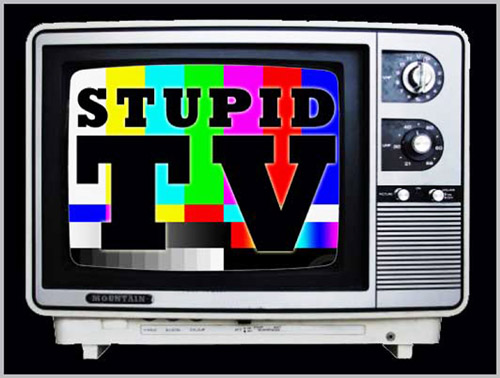
“The most corrosive piece of technology that I’ve ever seen is called television.”
“We think basically you watch television to turn your brain off, and you work on your computer when you want to turn your brain on.”
[Macworld, February 2004]
Conspiracy, corrosive, dumb, in need of being shot…obviously, Jobs was not a fan of the ‘boob tube.’ While these quotes and references clearly predict Apple’s coming impact on TV, I think he’s also aiming for an even higher mark—our culture at large. Currently, the people are getting what they ask for, he reasoned, if only by asking for nothing at all. By just sitting there and soaking-in what’s pumped at us, we’re as complicit in our stupidification as the morbidly obese person scarfing Hot Pockets and Mr. Pibb hand over fist. It’s omission versus commission, but the sin is just the same and more mortal than venial for Jobs. When you pay for nothing you should expect nothing and get nothing every time in the Book of Jobs.
I think this view of the landscape also moved him to move us to higher ground, the land of quality where the individual not only can choose what content to consume, but must choose. If that terrain was fruited with Apples, so much the better.
So, to hook us on the good stuff he’d have to first wean us off of the junk. Jobs’ television would have no mass ads, no more “low, low price” or “…lasts more than four hours seek medical attention immediately…”. Think the HBO model. You choose from a smaller edited selection of high quality stuff and you pay for it. By the episode. By the show. By the network. By the week. By the month. But we’ll all buy something by the something.
Why? Simple psychology.
When you pay for something you assign a value to it. Chances are you won’t sit there like a lumpy mouth-breather if you paid for a show. You’ll watch it more attentively than you would if it was just pumped into your living room like nitrous-oxide. That ups the pressure on content producers to create ever-higher caliber programming. There may be no second act otherwise. All boats rise as a result. “Consumers” become actual consumers, not victims. They call the shots and buy or not as so persuaded on the merit of the content itself, not the content’s PR man.
In my heart of hearts I think this was the grand plan all along. Jobs saw us going gently into that good night, led further and further down the path by a flickering signal that leads to nowhere– exactly where he thought we are now.
(Blank) as usual did not work for Jobs. Not politics. Not business. Not technology. Not media. Not sloth.
Of course he wanted to sell more Apple products, and killing television consumption, or putting a good dent in it anyway, was a key strategy in doing that. But I believe it was just that—strategy not objective. In typical Jobs style he not only thought different about it, he thought bigger.
And he thought how to do it with style and flair befitting Apple and Jobs himself.
The fact that his subversive campaign to kill campaigns began with a campaign (“1984”) is his most delicious bit of (social) engineering ever.
 buffaloreynolds